




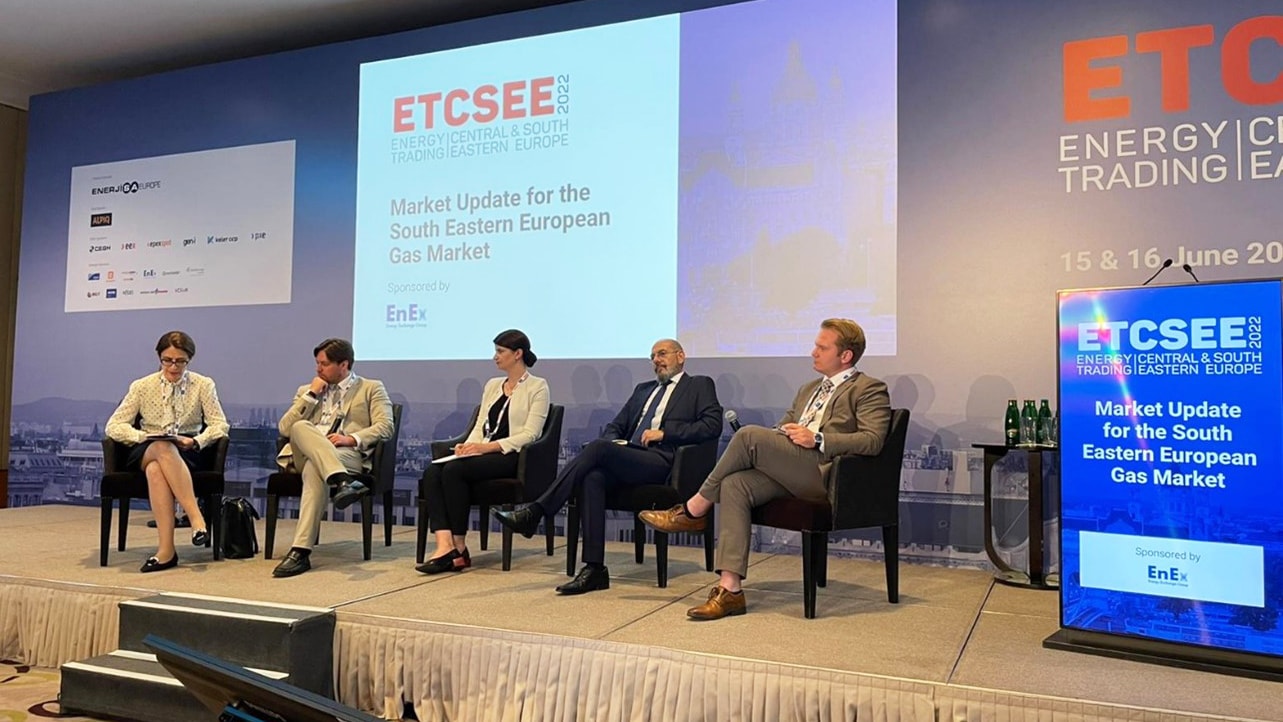
UEEX took place at the Energy Trading Conference for Central and South-East Europe (ETCSEE)
On June 15-16 in Budapest, Hungary, the Ukrainian Energy Exchange (UEEX) participated in the two-day European Trading Central South Europe (ETCSEE) conference. Lisse Geert van Vliet, Business Developer at UEEX, spoke along other industry experts in a panel about the functioning and development prospects of a regional gas market. He touched upon the challenges that the Ukrainian gas sector is currently facing and the potential impact of price regulation in the EU gas markets.
Geert van Vliet outlined some of the recent regulatory intervention in the Ukrainian gas market. Speaking at the panel "South East European Gas Market Update", Lisse Geert van Vliet outlined some of the recent regulatory intervention in the Ukrainian gas market. The issue of significantly narrowed market representation was discussed, as the wholesale, retail and distribution markets are now practically covered by one player. Changes in the balancing mechanism were also considered, which allows the TSO entities to adjust their trade notifications after a month is over and avoid commercial balancing. Whether the market can ever return to a competitive relationship remains an open question and will certainly be discussed after the war is over.
According to him, the Ukrainian gas market has been isolated from the EU markets since the beginning of the war. Liquidity has dropped significantly, but the market continues to function. However, he expects that Ukraine will have to join the EU markets again soon, as preparations for the next heating season begins. Gas in Ukraine continues to trade lower than in Europe – by about €15/MWh in May. Thus, the main resource in the market has become the resource of domestic production, to which the entire market is tied.
Commenting on the involvement of UEEX in the SEEGAS project, Lisse Geert van Vliet emphasized that the project is currently more about physical energy security than about uniting markets of South-Eastern and Eastern Europe. Projects currently undergoing in this framework are a study of the Trans-Balkan Pipeline (TBP) and a regional clearing study financed by participating exchanges and the European Bank of Reconstruction and Development (EBRD).
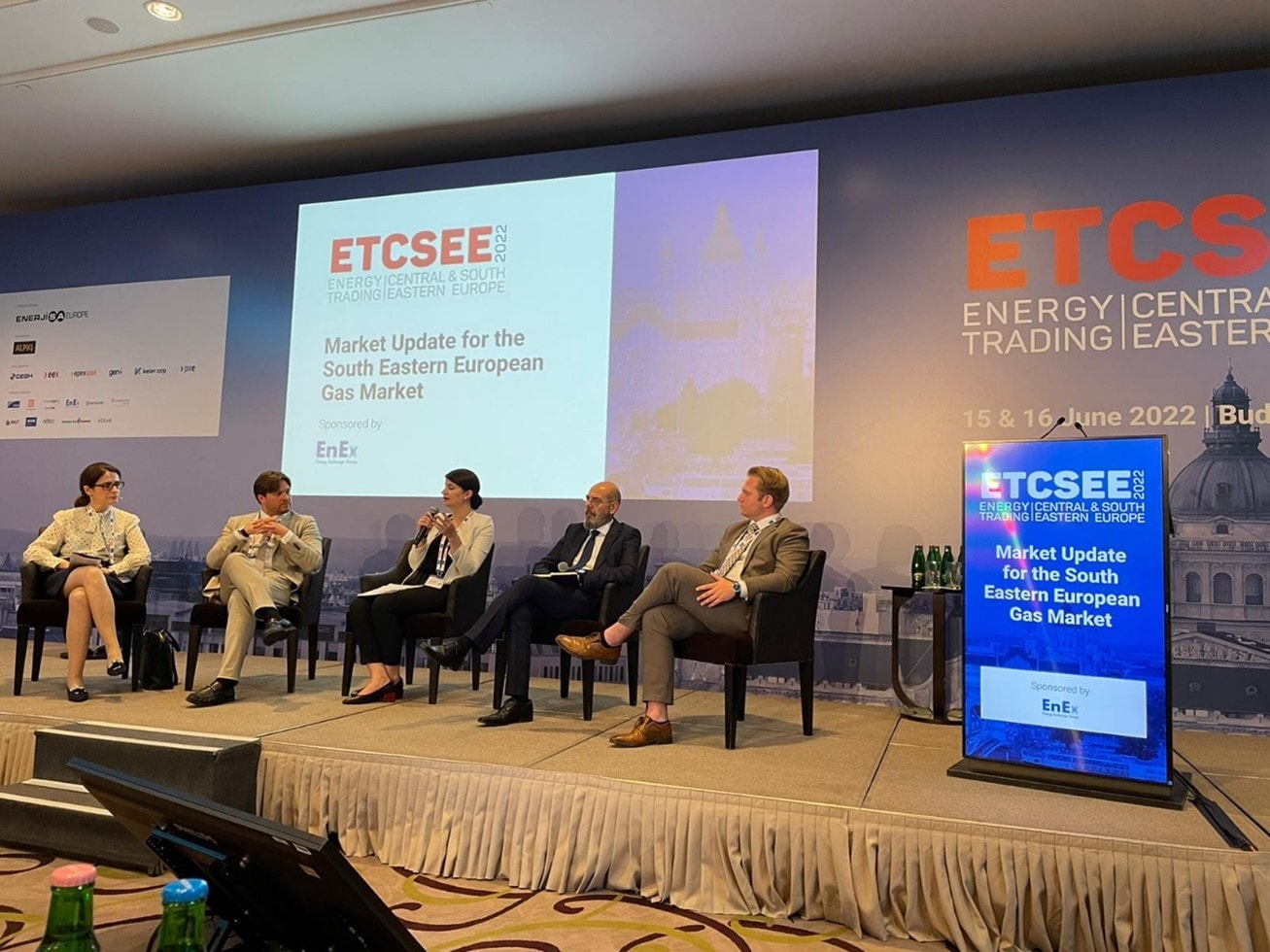
More generally, he addressed the current state of domestic gas consumption and production, as well as the potential alternative supply sources for Ukraine to ensure security of supply. A notable achievement over the past year was that OGTSU has managed to double the firm capacity for gas imports from Europe to Ukraine. Furthermore, he underlined the strategic importance of the Ukrainian underground gas storage facilities, which was recognized in the recent mandatory storage proposal of the EU. Also, Ukraine’s importance for the gas transit over short distances between the countries of Central and Eastern Europe were underlined.