Gas price: Ukraine and Europe. Market overview September 21 – 25, 2026
In the "Medium- and Long-Term Market" section of the UEEX, trading continued for resources for September, October, and subsequent months through 2026, involving the GTS and UGS. In total, 17 companies established positions for the sale or purchase of natural gas, including Naftogaz Trading, Ukrnaftoburinnya, Cherkasyteplokomunenergo, Concern MTM, the Gas TSO of Ukraine, D.Trading, and others. Trading activity intensified amidst price volatility. A total of 38.72 million cubic meters of natural gas was sold in the segment. Buy orders from Cherkasyteplokomunenergo, Naftogaz Trading, and Concern MTM, as well as a sell order from Ukrnaftoburinnya, were successful. The price decline for the September resource halted at around 17,000 (excluding VAT), while the October resource traded significantly lower—down to 16,000 (excluding VAT).
On the UEEX short-term natural gas market, participants placed orders on the within-day and day-ahead markets, as well as for the GTS and UGS. In total, 83 exchange trades were concluded with an aggregate volume of 2,792 thousand cubic meters.
Geopolitical headlines continue to drive sentiment in European gas markets. Prices are being supported not only by the immediate risk of supply disruptions but also by the fragility of global energy routes, competition with Asia for available LNG cargoes, and low gas inventories in Europe. At the same time, the market reacts with a decline to any signals regarding a potential resolution of the situation in the Middle East.
Despite a correction early in the week, prices remained close to four-year highs. On September 23, the European TTF price stood at around €73/MWh, compared to €80/MWh a week earlier and a peak of €84/MWh on September 14. Significant within-day volatility was triggered by reports that Tehran had allegedly offered to resume shipping through the Strait of Hormuz within seven days, provided that US military pressure was eased and the blockade of Iranian ports was lifted.
At the same time, shipping traffic through the Strait of Hormuz remains negligible compared to pre-war levels. On September 17, the first Qatari LNG shipments in weeks appeared, though the vessels had been loaded earlier. Risks to shipping persist: on September 21, a tanker was struck by an unidentified projectile.
Weak Asian demand remains a key factor restraining prices. LNG imports to the region in September are estimated at 20.09 million tonnes—the lowest level for that month since 2018. Some cargoes may be redirected to Europe; according to LSEG data, buyers in China, Japan, and Turkey are offering transshipments or spot sales. Platts JKM stands at about $27 per million Btu, while Goldman Sachs estimates a level of about $30 per million Btu as the threshold at which demand from India’s industrial consumers begins to decline.
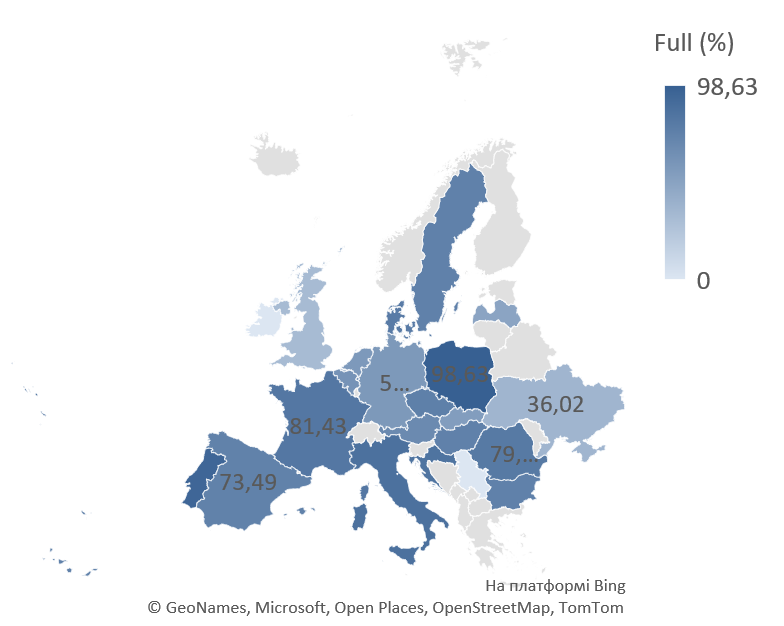
As of September 24, EU storage facilities were 70.35% full—approximately 17% below the ten-year average. Fill levels stood at 56.99% in Germany and 55.96% in the Netherlands.
Maintenance work in Norway exerted additional pressure on the market this week. Export capacities began to gradually recover starting September 24, supporting an increase in Norwegian supplies ahead of winter.
Natural gas imports from Europe stood at 1.6 million cubic meters per day (down 0.1 million cubic meters from the previous week’s level); imports originated from Poland. Natural gas volumes held in customs warehouses amounted to 15.5 billion cubic meters (up 1.6%). Withdrawals from UGS were virtually non-existent; instead, injection was observed at a rate of approximately 18 million cubic meters per day.