Gas price: Ukraine and Europe. Market overview October 5 – 9, 2026
Trading of the October resource — for delivery within the GTS and UGS—continued in the "Medium- and Long-Term Market" section of the Ukrainian Energy Exchange (UEEX). In total, seven companies placed buy or sell orders for natural gas, including Naftogaz Trading, GTS Operator of Ukraine, Energygaztrade, D.Trading, and others. In total, 11.5 million cubic meters of natural gas were sold in the section. Purchase bids from Naftogaz Trading were successful. Prices resumed their upward trend in the second half of the week.
On the UEEX short-term natural gas market, participants submitted orders for the intraday market involving the gas transmission system and underground gas storage facilities. A total of 33 exchange trades were concluded, with an aggregate volume of 1,095 thousand cubic meters.
With the onset of the winter season, prices on European gas markets rose due to standard short-term factors: colder weather and a drop in wind power generation. The market appears to have abandoned expectations of a quick resolution to the current conflict in the Middle East and has begun factoring in a prolonged disruption of Qatari gas supplies as the base-case scenario.
Norwegian gas supply volumes have returned to normal following the completion of maintenance on Norway’s offshore gas fields and pipelines, improving the supply outlook. However, gas storage levels in Europe remain relatively low, and the situation regarding LNG shipments through the Strait of Hormuz remains uncertain.
According to maritime security sources tracking incidents, the highest number of attacks on tankers in the Strait of Hormuz since the start of the war with Iran was recorded last week, coinciding with an increase in exports from Persian Gulf countries. Despite the rise in attacks on vessels, gas supply volumes from the Persian Gulf have grown significantly: 19 LNG shipments passed through the strait in September, marking the highest monthly figure since the war began.
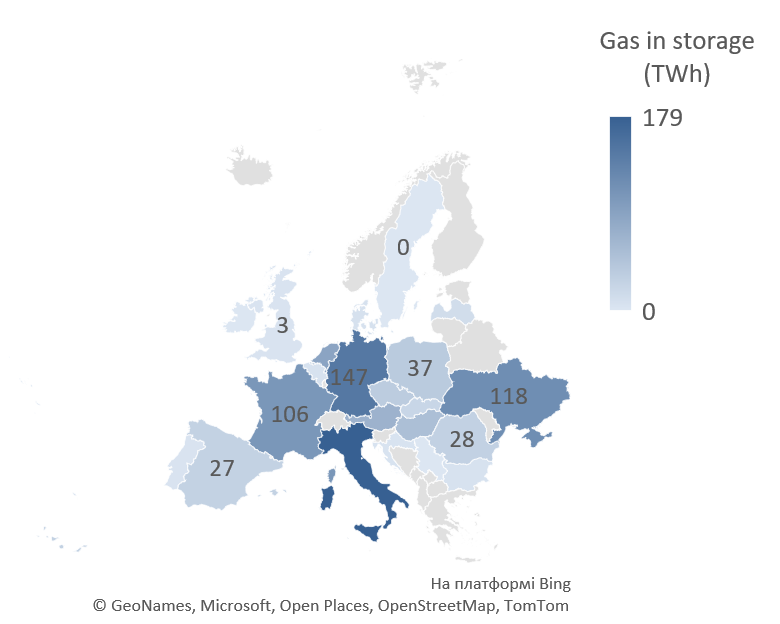
As of October 8, the aggregate fill level of EU gas storage facilities stood at 73.12%. Germany—lagging behind with a level of 59.44% compared to France’s 86.09%—responded with a rare direct intervention, instructing the state-owned trading company SEFE to purchase and store an additional 8 TWh of gas by December 15. Across northwestern Europe, storage levels remain below those recorded at this time of year in any of the previous five years.
Regarding pipeline supplies from Norway, following the completion of the second maintenance schedule and the repair of a compressor fault at the Troll facility, supply volumes have recovered to near-peak levels of approximately 330 million cubic meters per day. Gassco, the operator of Norway’s gas pipeline network, has stated that Norwegian offshore gas fields are ready to increase supply volumes during the winter period.
As buyers and sellers place supply risks in the agreed prices, additional volumes of gas with supplies from Norway only partially eased the upward pressure on gas prices.
Natural gas imports from European directions stood at 2.2 million cubic meters per day, with volumes arriving from Hungary and Moldova. Exports from customs warehouses averaged 7.8 million cubic meters per day, directed toward Poland, Slovakia, and Hungary. Ukraine’s storage facilities held 15.8 billion cubic meters of natural gas (up 1% from the previous week). There was virtually no withdrawal from underground storage facilities; instead, injection was observed at a rate of approximately 20 million cubic meters per day.