Gas price: Ukraine and Europe. Market overview March 23 - 27, 2026
In the "Medium and Long-Term Market" section of the UEEX, trading in the resource continued in March and April 2026. In total, positions for the sale or purchase of natural gas were formed by 8 companies, including: Ukrnafta, MC Ukrnaftoburinnia, MHP Eco Energy, GTS Operator of Ukraine, Tepla, etc. During the week, 5.02 million cubic meters of natural gas were sold in the section. Natural gas with delivery in March and April was sold. The positions of the companies GTS Operator of Ukraine, Energo Zbut Trans, MHP Eco Energy - for purchase, Energy Business - for sale were successful. Sales prices were in the range of 24000-24550 UAH/thousand cubic meters excluding VAT with a tendency to increase.
On the short-term natural gas market of the UEEX, participants formed orders on the within-day market and the day-ahead market. In total, 49 deals were concluded with a total volume of 3,543 thousand cubic meters.
The continued negotiations weighed on sentiment in the last week of March, leaving the market torn between geopolitical support and downward pressure. Geopolitical tensions continue to underpin forward pricing.
European natural gas futures rose to 55 euros/MWh on Thursday, snapping a four-day decline amid uncertainty over a Middle East ceasefire and ongoing threats to energy infrastructure. Initial expectations for a ceasefire diminished after Iran rejected Washington’s 15-point peace proposal and put forward its own conditions, which include a claim to control the Strait of Hormuz. The energy infrastructure of the Persian Gulf has suffered significant damage, with around 40 energy facilities attacked. The virtual closure of the Strait of Hormuz has led to a redirection of energy supplies, a sharp reduction in the availability of LNG, and increased competition with Asian buyers for alternatives.
The second area of risk is nuclear and regional security. Russia’s state nuclear company Rosatom is reportedly evacuating personnel from the Bushehr nuclear plant after shells hit the facility in recent days, and neighboring Kuwait has issued a radiation warning to its citizens.
Diplomatically, Tehran is reportedly signaling that ending the conflict is Iran’s own decision.
The Ras Laffan LNG plant remains idle in the short term, and in the medium to long term will operate at 83% of its pre-war capacity for five years after the facility restarts. The Strait of Hormuz remains almost completely closed, although several vessels have been detected passing through Iranian territorial waters, paying the Iranian regime for safe passage.
The conflict premium remains built into pricing, and prices are sensitive to both geopolitical news and physical risks related to infrastructure and shipping. The market is starting to view disruptions as something that could impact not only delivery efficiency but also expectations for years to come if infrastructure damage and heightened security risk persist.
Energy experts predict that gas prices in Europe will continue to rise. According to StanChart, TFF gas prices could exceed EUR 80/MWh if the conflict between the US and Iran remains unresolved before the start of the summer injection season.
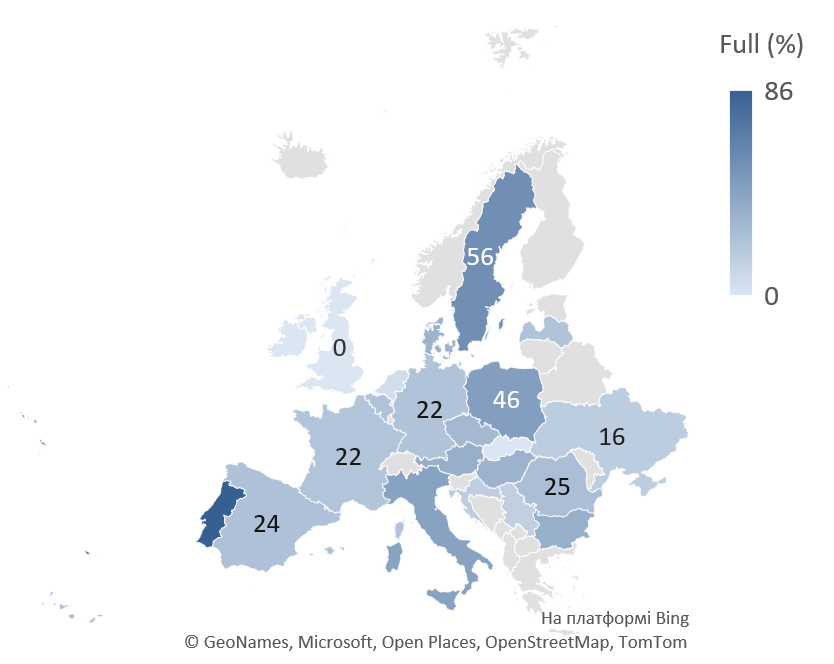
The turmoil in Europe’s energy sector is not solely due to the conflict in the Middle East. Europe’s current gas storage capacity is just 28.4% of total capacity, the lowest level since 2022. The situation is particularly acute in the Netherlands, where the closure of the Groningen gas field and the cessation of associated trading activities have led to record low levels of local storage, now below 6%.
Natural gas imports from Europe averaged about 24.6 million cubic meters per day (-1.2%). Inflows are declining against the backdrop of rising quotations in Europe. Imports were present from all neighboring European countries. The basis was the Polish and Hungarian directions. There was no export from the customs warehouse. In the storage facilities of Ukraine there were 9.54 (+0.63%) billion cubic meters of natural gas. There was practically no withdrawal from the underground gas storage facilities, instead there were small volumes of injection - about 16 million cubic meters per day.