Gas price: Ukraine and Europe. Market overview June 8 - 12, 2026
In the "Medium and Long-Term Market" section of the UEEX, trading in the resource continued in June and July 2026. In total, positions for the sale or purchase of natural gas were formed by 8 companies: MC Ukrnaftoburinnia, GPK Naftogaz Trading, MHP Eco Energy, GTS Operator of Ukraine, etc. Last week, Ukrnafta came out with offers to sell the June resource in the underground storage facilities. In total, 21,500 thousand cubic meters of natural gas were sold in the section - resources for June and July. The positions for sale from Ukrnafta and for purchase from the GTS Operator, Ukrzaliznytsia, were successful. The activity of the participants was high, the sales volumes increased 7 times compared to the previous week.
On the short-term natural gas market of the UEEX, participants formed orders on the within-day market and the day-ahead market. In total, 57 deals were concluded with a total volume of 1,523 thousand cubic meters.
This week, TTF showed again that the market is not trading for a comfortable balance, but for a risk premium. After moving towards prices at 49-50 EUR/MWh, the contract retreated towards 48 EUR/MWh at the end of the week on de-escalation headlines regarding the US and Iran. The lack of significant price movements despite the apparent escalation signals that the market is struggling with deep uncertainty. The main factors were: low storage, competition for LNG and weak flexibility margin before winter.
Geopolitics remained the main short-term driver. Some LNG tankers have once again passed through Hormuz, but the route does not appear to be fully normalized: traffic is taking place against a backdrop of military escalation and uncertain negotiations. For Europe, it is important not only how much cargo will physically arrive from the Persian Gulf, but also how quickly global logistics will change. Any disruption immediately raises the price of free spot shipments and intensifies competition with Asia.
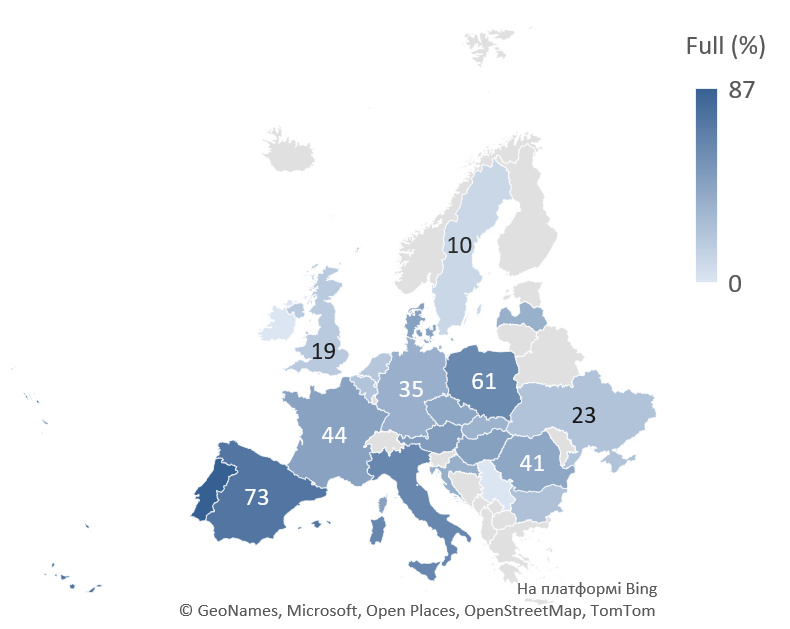
Storage is gradually filling, but the pace remains a major weakness. As of 10/06/2026, EU storage occupancy was around 42.8%, up from the start of the month but 9% below last year’s trajectory. Forecasts for filling stocks, particularly for North-West Europe, show that stocks in the region remain at their lowest level in almost a decade, starting in July.
Flexible EU rules reduce the risk of forced purchases at any price, but do not eliminate the physical need to build up sufficient volume before winter. Some European gas markets continue to discourage injection, and European gas prices for the remaining summer months exceed those for winter 2026. LNG this week was not just a source of supply, but an indicator of competition. Asian demand is recovering, with China and Japan bringing back some of their spot demand, limiting the amount of flexible cargoes for Europe. At the same time, the US is gradually redirecting more LNG to Europe after a weaker May, which is partially easing the balance.
For pipeline gas, the focus remains on Norway: the summer repair season is not a shock in itself, but with low storage, any extension is quickly overestimated in the TTF. Additionally, there is a hidden tension on the electricity market: weaker hydro generation in Italy and a high winter baseload premium mean that gas may be needed as an insurance resource not only for heating, but also for electricity.
Natural gas imports from Europe were at 0.8 million cubic meters per day (unchanged from the previous week). Imports were present only from Poland. Exports from bonded warehouses were absent. Ukraine’s storage facilities contained 11.5 (+2%) billion cubic meters of natural gas. There was almost no withdrawal from underground storage facilities, but there was injection - about 30 million cubic meters per day.