Gas price: Ukraine and Europe. Market overview June 29 – July 3, 2026
In the "Medium and Long-Term Market" section of the UEEX, trading in resources for July, August and November 2026 continued. In total, positions for the sale or purchase of natural gas were formed by 8 companies: Ukrnafta, GSC Naftogaz Trading, MTM Concern, GTS Operator of Ukraine, Ukrzaliznytsia, etc. In total, 11,530 thousand cubic meters of natural gas were sold in the section - a resource of July 2026 in GTS and underground storage facilities. Successful were the purchase positions from the GTS Operator of Ukraine, Ukrzaliznytsia, and MTM Concern.
On the short-term natural gas market of the UEEX, participants formed orders on the intraday market and the within-day market. In total, 86 deals were concluded with a total volume of 1,622 thousand cubic meters.
Last week, the European market began to post a risk premium again, although without returning to June peaks. The M+1 gas contract briefly reached its highest level since the signing of the US-Iran memorandum of understanding, with the Winter 26 and Summer 27 contracts following a similar trajectory. Maritime traffic through the Strait of Hormuz, while improving somewhat, remains well below pre-war levels: in the six months before the war, just under 90 tankers transited the Strait each month on average. Following last weekend’s strikes, LNG transit has been close to zero, with the only crossing being the transit of the Liberian-flagged vessel Umm Al-Ashtan on June 29.
Italian utility Edison announced that QatarEnergy has again extended its force majeure until September 2026. The war and the closure of the Strait of Hormuz have prompted many global LNG importers to seek opportunities to diversify their portfolios, often in favor of US LNG exporters near the Gulf of Mexico.
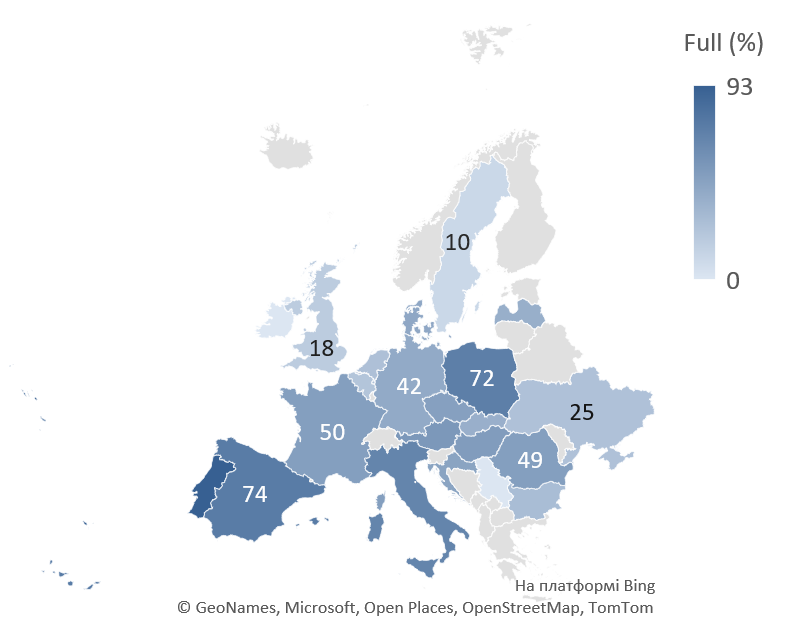
One of the most closely watched fundamental factors remains gas storage in Europe. The current storage occupancy rate as of July 2 was 49.2%, compared to a five-year average of around 62%. This level of stockpiles increases Europe’s dependence on LNG imports and reduces the system’s ability to cope with unexpected shocks. The replenishment process could be complicated by several factors, including unplanned power outages in Norway, increased demand for LNG in Asia during the heatwave, disruptions to LNG exports from the US, low wind generation, heatwaves in Europe, hydropower shortages in Nordic countries, and hydropower restrictions in Nordic countries. Many of these events have been repeated over the past few summer seasons. The decline in water reserves, acting as a reduced buffer, could exacerbate their impact on prices.
Another factor that also came into sharper focus last week was the power sector. Heat above 40°C, weak winds and restrictions on some French nuclear generation have increased the need for flexible gas-fired plants. Therefore, gas acted not only as a resource for injection before winter, but also as insurance for the electricity system in summer, which reduces the scope for rapid stockpiling.
Investment funds again reduced their net long positions on the Dutch TTF, reducing long positions from 365 TWh to 334 TWh, bringing the total net long position to 153 TWh.
Natural gas imports from Europe were at the level of 0.8-1.6 million cubic meters per day, having doubled since July 1. Imports were present only from Poland. Exports from customs warehouses were absent. Ukraine’s storage facilities contained 12.04 (+2.19%) billion cubic meters of natural gas. Withdrawals from underground storage facilities were almost non-existent, but there was injection - about 38 million cubic meters per day.