Gas price: Ukraine and Europe. Market overview June 22 - 26, 2026
In the "Medium and Long-Term Market" section of the UEEX, trading in the resource continued in June, July, and August 2026. In total, positions for the sale or purchase of natural gas were formed by 8 companies: Ukrnafta, GSC Naftogaz Trading, MHP Eco Energy, GTS Operator of Ukraine, etc. In total, the section sold 7925 thousand cubic meters of natural gas - resources of June and July. There was a higher demand for the June resource with a higher price level. Successful were positions for sale from Ukrnafta and for purchase from the GTS Operator, Ukrzaliznytsia, Energo zbut transu. The activity of participants was high, prices stabilized.
On the short-term natural gas market of the UEEX, participants formed orders on the within-day market and the day-ahead market. In total, 108 deals were concluded with a total volume of 3,247 thousand cubic meters.
This week, the TTF continues to lower the geopolitical premium. After closing at 42.14 euros/MWh the previous Friday, the July contract fell to 40.32 euros/MWh on Thursday, and on the morning of June 26 was trading around 40.40 euros/MWh, down about 4.22% from the previous Friday. The main driver remains the reduction in the geopolitical premium after the announcement of the cessation of hostilities between the US and Iran and the restoration of expectations of the normal operation of the Strait of Hormuz. At the same time, the market is not yet assuming a full normalization of the situation: any new escalation in the region can quickly return the geopolitical premium to prices.
The Strait of Hormuz remains a key short-term factor for the gas market. While the risks of shipping disruptions have significantly reduced this week and expectations for Qatari LNG supplies have improved, market participants are not yet betting on a full normalization of the situation.
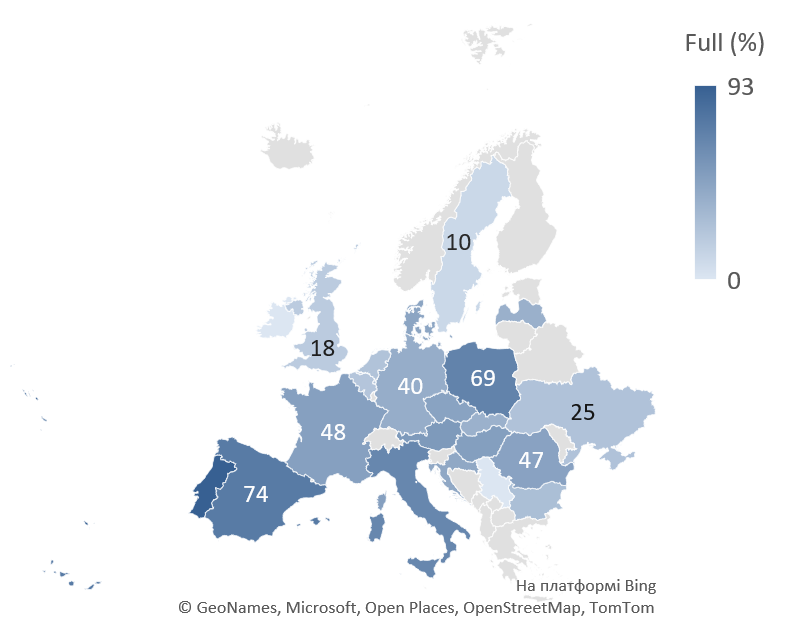
Gas storage facilities continue to fill, but the rate of injection remains insufficient to fully restore supplies. As of 23 June, the EU’s underground storage capacity is around 46%, which is around 10 bcm below last year’s figures and significantly below the five-year average. Low levels of capacity remain in Germany - 39.5%, the Netherlands - 24.15% and Slovakia - 36.52%.
The LNG market is gradually stabilizing after geopolitical tensions eased. Expectations of uninterrupted operation of Qatari export capacities and normalization of shipping have reduced the risk premium in spot prices. At the same time, competition between Europe and Asia for available LNG cargoes remains high. Active demand from Asian buyers limits the potential for further TTF declines even with favorable geopolitical developments.
There were no significant new developments in the pipeline gas market this week. Deliveries from Norway, which remains the main source of pipeline imports for the EU, were carried out as usual without any large-scale unplanned restrictions. At the same time, the European gas balance remains largely dependent on LNG imports, and any changes in the global liquefied gas market continue to be quickly reflected in TTF quotes.
Natural gas imports from Europe were at 0.8 million cubic meters per day (unchanged from the previous week). Imports were only from Poland. There were no exports from bonded warehouses. Ukraine’s storage facilities contained 12.04 (+2.05%) billion cubic meters of natural gas. There was almost no withdrawal from underground storage facilities, but there was injection - about 33 million cubic meters per day.