Gas price: Ukraine and Europe. Market overview June 1 - 5, 2026
In the "Medium and Long-Term Market" section of the UEEX, trading in the resource continued in June and July 2026. In total, positions for the sale or purchase of natural gas were formed by 7 companies: MC Ukrnaftoburinnia, CSC Naftogaz Trading, MHP Eco Energy, GTS Operator of Ukraine, etc. During the week, 3,000 thousand cubic meters of natural gas were sold in the section - the June resource in UGS. The position to buy Ukrzaliznytsia at a price of 21,500 UAH/thousand cubic meters excluding VAT was successful. The activity of participants was not high at the beginning of the month.
On the short-term natural gas market of the UEEX, participants formed orders on the within-day market and the day-ahead market. In total, 62 deals were concluded with a total volume of 2,230 thousand cubic meters.
This week, the risk of volatility in Europe has become higher. TTF ended the week above 48 EUR/MWh and was heading for a weekly increase after last week’s withdrawal of part of the geopolitical premium. Key message: The market has not seen a comfortable gas surplus. Even if some news gives a brief boost to this, low storage, competition for LNG and the winter premium in the energy segment limit the scope for a sustained decline.
Last week, geopolitical factors again put upward pressure on prices. While earlier the market was partially betting on a quick resumption of normal shipping through the Strait of Hormuz, now the US-Iran talks have not yielded any clear progress, and the risk of longer disruptions in the Persian Gulf has returned and is reflected in the price. For Europe, not only direct dependence on this route is important, but also the global effect: fewer free LNG cargoes, stronger competition with Asia, and more expensive LNG shipments with the possibility of rapid redirection.
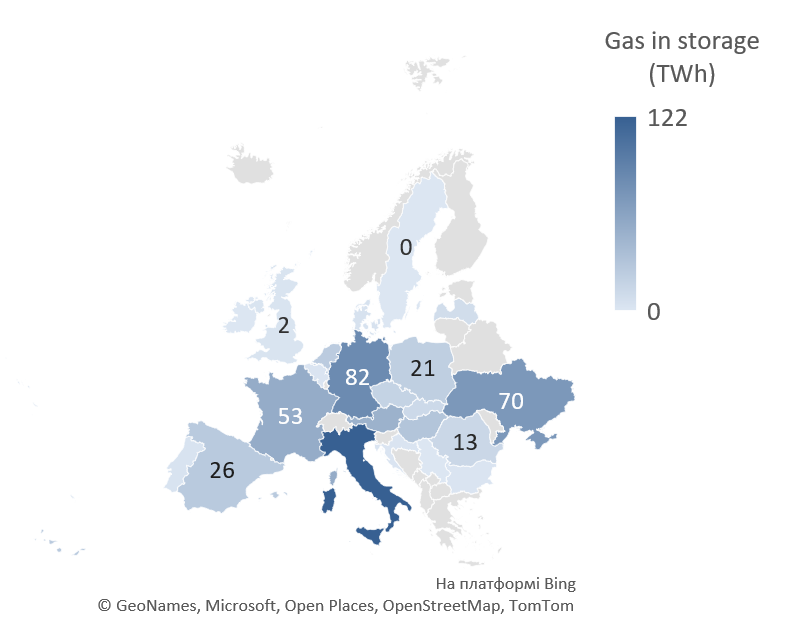
The occupancy rate of European gas storage facilities as of 03.06.2026 was about 41.3%, or 467 TWh. This is higher than at the end of May, but still below the comfortable seasonal trajectory. A separate risk is regional asymmetry: in Germany the level was about 33%, i.e. significantly below the usual level for the beginning of June. Therefore, the EU average does not remove the question of the speed of injection in key countries. The main problem with storage is the pace, not the fact of injection. Injections since the beginning of the spring season are about 20% slower than last year, and negative seasonal spreads reduce the incentive to buy gas in the summer for sale in the winter. Accordingly, strong LNG inflows may reassure TTF, but weak supplies, heat in Asia or new restrictions around the Persian Gulf will quickly return the risk premium.
LNG remains the main bridge between the European balance and global competition. In May, LNG exports from the US fell due to repairs to 10.2 million tonnes, while the share of deliveries to Asia increased on the back of a more favourable JKM/TTF spread. Europe remained the largest destination, but its share decreased. This means that the EU needs to simultaneously replenish storage and compete for spot cargoes, preventing a sharp increase in the price of summer injection.
For pipeline gas, the focus was on Norway: at the beginning of the week, the risk of a strike from June 5 supported prices, but on Friday this risk was removed after an agreement between companies and unions. However, Norway still remains a key supplier, so repairs and unscheduled shutdowns remain important triggers.
Natural gas imports from Europe were at 0.8 million cubic meters per day (-27% compared to the previous week). Imports were only from Poland. There was no export from the customs warehouse. Ukraine’s storage facilities contained 11.28 (+2.27%) billion cubic meters of natural gas. There was almost no withdrawal from the underground gas storage facilities, but there was injection - about 35 million cubic meters per day.