Gas price: Ukraine and Europe. Market overview July 6 – 10, 2026
In the section "Medium and long-term market" of the UEEX, trading in resources for July and August 2026 continued. In total, positions for the sale or purchase of natural gas were formed by 6 companies: Ukrnafta, GSC Naftogaz Trading, GTS Operator of Ukraine, LTK Electrum, etc. In total, 4,200 thousand cubic meters of natural gas were sold in the section - a resource for July and August 2026 in the GTS. Positions for the purchase from the GTS Operator of Ukraine were successful.
On the short-term natural gas market of the UEEX, participants formed orders on the within-day market. In total, 77 deals were concluded with a total volume of 3,593 thousand cubic meters.
This week, European gas contracts rose sharply again, with the M+1 contract reaching 50.1 EUR/MWh on July 9, before falling to around 49.1 EUR/MWh on the morning of July 10. (~+11% from the previous Friday’s level). The main driver is new US strikes on Iran after attacks on commercial vessels and Tehran’s response. The route remains risky, but there is no complete stoppage of flows: at least 5 LNG tankers entered the strait, and 22 ships bound for Japan left the Persian Gulf on July 7-9. Without a new physical shock, TTF could lose some of its geopolitical premium, but low inventories and competition from Asia will limit a sustained decline. Spot competition for LNG remains fierce. In June, Europe received less than 42% of US exports. Asian JKM traded at a significant premium to TTF, with Egypt paying an additional premium. For Europe, this means that flexible cargoes have to be priced in, especially with weak inventories.
The German government is preparing a state strategic reserve of almost 10% of national storage capacity (~24 TWh). The purchases are planned to be spread over 2-3 years, so there will be no immediate impact on the balance sheet, but the decision confirms that Berlin sees a long-term risk of disruptions and insufficient commercial reserves.
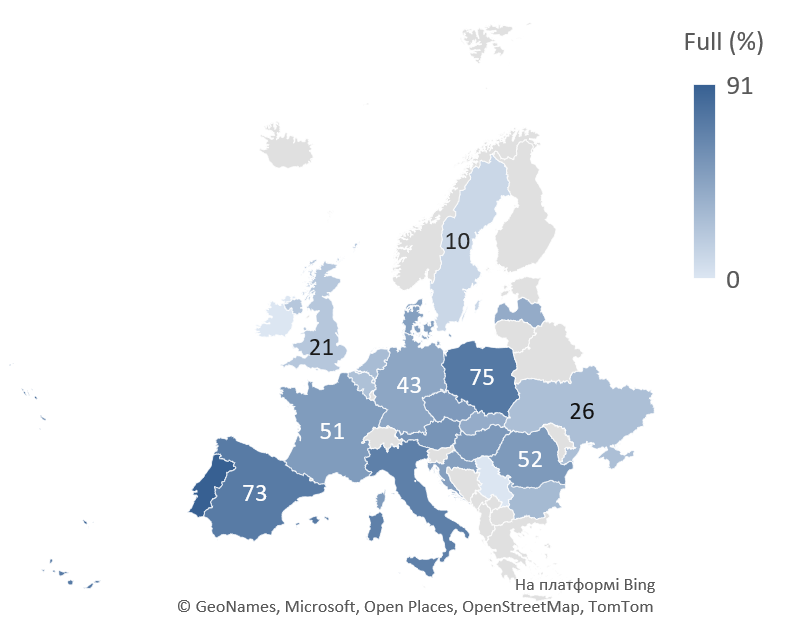
The main fundamental risk for Europe is the slow replenishment of storage. As of July 8, they were about 50% full, about 16% below the five-year seasonal average. Recent analysis shows that Europe may not even reach 70% fill by the start of the 2026 winter season—below the target of 80%, leaving less room for a cold winter and more room for gas price volatility. High price of near-term contracts: it worsens the economics of injection and forces you to pay for both current security and future winter storage.
Electricity also supported demand. A new heat wave increased the need for cooling, and high river temperatures temporarily limited some of France’s nuclear generation. Gas-fired plants are once again acting as system insurance.
Natural gas imports from Europe were at the level of 1.6 million cubic meters per day. Imports were present only from Poland. Exports from customs warehouses were absent. Ukrainian storage facilities contained 12.57 (+2%) billion cubic meters of natural gas. Withdrawals from underground storage facilities were almost non-existent, but there was injection - about 38 million cubic meters per day.