Gas price: Ukraine and Europe. Market overview July 27 – 31, 2026
In the section "Medium and long-term market" of the UEEX, trading in resources for July, August, September 2026 continued. In total, positions for the sale or purchase of natural gas were formed by 9 companies: GSC Naftogaz Trading, GTS Operator of Ukraine, Ukrnafta, Nadra-Geoinvest, etc. In total, 6.8 million cubic meters of natural gas were sold in the section - a resource for August 2026 in GTS and underground storage facilities. Successful were the positions for purchase from the GTS Operator of Ukraine, Ukrzaliznytsia, Energo Zbut Transu, Cherkasyteplokomunenergo and Cocern "MTM". The vast majority of the resource was purchased for further electricity production.
On the short-term natural gas market of the UEEX, participants formed applications on the within-day and day-ahead markets, in the GTS and UGS. In total, 97 agreements were concluded with a total volume of 5,557 thousand cubic meters.
Compared to the previous week, European prices are virtually unchanged, but there is significant intraweek volatility, as gas market participants try to rethink another cycle of escalation and de-escalation in the Middle East. Another important development was the increase in electricity prices in France, which was also reflected in gas prices, as extreme heat increased the need for imported electricity. Increased competition in the LNG market and reduced wind energy forecasts added pressure, keeping the gas price curve stable and increasing reliance on gas-fired generation.
The weekend of July 25-26 passed largely without incident, with the US and Iran seemingly moving into a new phase of a ceasefire after 13 consecutive nights of US strikes on Iranian targets. The strike-free weekend sent gas prices down as much as 9% on Monday the 27th, followed by another day of declines on Tuesday the 28th. The bearish move was interrupted on Wednesday when another round of strikes took place between the US and Iran.
Wind power generation is forecast to be below normal in August, likely to increase reliance on gas-fired power plants. Meanwhile, another heat wave is expected in Europe, increasing demand for air conditioning and reducing the availability of other types of generation.
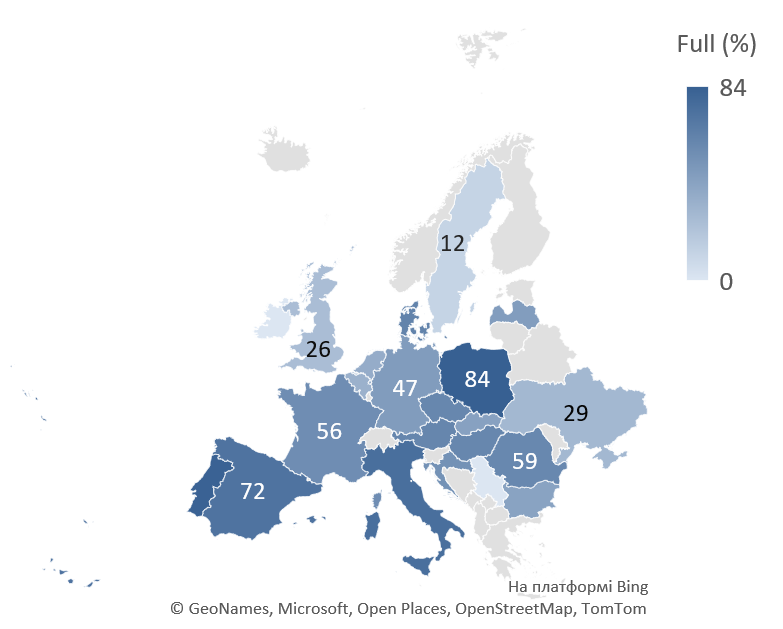
The total filling of gas storage facilities in Europe reached 56.39% as of 30/07/2026, and the European continent is likely to start the winter of 2026/27 with reserves below the lowest level since 2012/2013.
Competition for LNG increases pressure. Asia is trading at a premium, while less than half of total U.S. LNG exports in June went to Europe, down 22% from a year ago. If global demand increases, Europe may have to pay more to attract cargoes, leaving less gas to pump into storage.
Investment funds increased their net long positions in Europe’s key gas benchmark, TTF, to an eight-week high amid sustained bullish sentiment. The latest Commitment of Traders report shows funds holding a net long position of 265 TWh, indicating hedge funds are expecting further price increases.
Geopolitical uncertainty, weaker wind energy expectations and higher cooling demand in Europe continue to put pressure on winter 2026 contracts, while contracts such as summer 2027 and later delivery periods offer better value.
Natural gas imports from Europe were at the level of 0.8 million cubic meters per day (-0.7 million cubic meters from the previous week). Imports were present only from Poland. Exports from customs warehouses were absent. Ukrainian storage facilities contained 13.11 (+2.2%) billion cubic meters of natural gas. Withdrawals from underground storage facilities were almost non-existent, but there was injection - about 37 million cubic meters per day.