Gas price: Ukraine and Europe. Market overview July 13 – 17, 2026
In the "Medium and Long-Term Market" section of the UEEX, trading in resources continued for July and August 2026. In total, positions for the sale or purchase of natural gas were formed by 9 companies: Ukrnafta, GSC Naftogaz Trading, GTS Operator of Ukraine, LTK Electrum, etc. In total, the section sold 4,350 thousand cubic meters of natural gas - a resource for July and August 2026 in the GTS and UGS. Successful were positions for purchase from the GTS Operator of Ukraine, Cherkasyteplokomunenergo, and for sale - from Ukrnafta.
On the short-term natural gas market of the UEEX, participants formed orders on the within-day market and the day-ahead market. In total, 56 deals were concluded with a total volume of 1,551 thousand cubic meters.
This week, European gas contracts rose again. The M+1 TTF increased every session: from 48.8 EUR/MWh at the close of the previous Friday to around 57 EUR/MWh on the morning of July 17 (+15%). The main driver was the renewed hostilities between the US and Iran and new risks for shipping through the Strait of Hormuz. The status of the Strait and the differences of understanding remain very controversial.
The market is once again assessing not only the actual availability of Qatari LNG, but also freight, insurance and the willingness of shipowners to enter the region. Even without a complete stoppage of flows, the geopolitical premium has quickly returned to near-term and winter contracts.
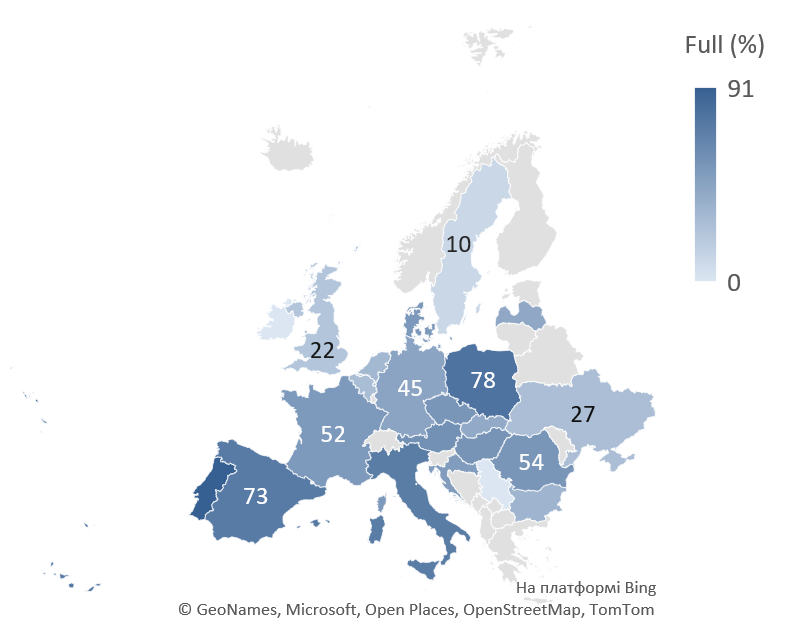
Spot competition has become tougher. Kpler estimates that July LNG imports to Europe could fall to 6.9 million tonnes, the lowest since September 2024, while Asia could receive 23.05 million tonnes, a six-month high. For Europe, this means fewer flexible Atlantic cargoes and the need to pay more to return them to Europe. Price signals for US LNG exporters continue to favor the Northeast Asian market over European destinations, with Asia accounting for a growing share of total US LNG exports during the Middle East conflict. Despite strong competition from Asia, the EU Energy Union Working Group issued a statement on Monday saying that “there are no immediate security of supply concerns for the winter of 2026-2027, as storage filling targets remain achievable by the start of the winter season, ensuring an adequate level of readiness.” As of July 16, EU storage was 53.0% full. Injections are ongoing, but levels are still well below seasonal levels. Germany looks the weakest at 44.9% and the Netherlands at 31.4%, while Italy and Poland have significantly more comfortable reserves. Changing the trend from a steady decline requires a real return of Qatari and American cargoes to Europe and an acceleration of pumping.
Amid rising prices, investment funds are increasing their bets on further gas price increases: over the week they added 23 TWh of long positions and reduced 3 TWh of short positions on TTF contracts. This raised the net long position to 181 TWh — the highest in the last three weeks, confirming the predominantly bullish sentiment in the market.
Natural gas imports from Europe were at 1.6 million cubic meters per day. Imports were present only from Poland. Exports from bonded warehouses were absent. Ukraine’s storage facilities contained 12.84 (+2.12%) billion cubic meters of natural gas. Withdrawals from underground storage facilities were almost non-existent, but there was injection - about 38 million cubic meters per day.