Gas price: Ukraine and Europe. Market overview January 5 - 9, 2026
On the "Medium and Long-Term Market" section of the UEEX, trading in resources continued for January, February, and March 2026. In total, positions for the purchase and sale of natural gas were formed by 5 companies, including Ukrnafta, MC Ukrnaftoburinnia, and LTK Electrum. The section sold 9.1 million cubic meters (+11%) of natural gas. The main type of natural gas sold was natural gas with delivery to the GTS in January 2026. The prices of the sold items were in the range of 19,312-19,450 UAH/thousand cubic meters excluding VAT, which is lower than last week.
The GTS Operator of Ukraine also conducted purchases in the "Cross-border" and "Customs Warehouse" sections. About 9.4 million cubic meters (-57.3%) of natural gas were purchased with transmission at a point on the border at prices in the range of 34.58-35.6 euros/MWh.
In addition, Ukrnafta sold 2 million cubic meters. m of natural gas in the differential trade section with a premium of EUR 8,1-8,3 to the TTF.
On the short-term natural gas market of the UEEX, participants formed orders on the within-day market and the day-ahead market. In total, 51 deals were concluded with a total volume of 1,326 thousand cubic meters (-6.9%).
The beginning of 2026 on European gas markets came against a backdrop of cooling temperatures and unprecedented geopolitical news. Weather forecasts for late 2025 indicated a cold start to January and were confirmed as temperatures fell. Successive forecast updates this week have revised expected temperatures downwards. The latest 14-day EU weather forecast model indicates that temperatures will remain below seasonal normal until at least 21 January.
The United States’ embrace of Venezuelan President Nicolas Maduro and President Donald Trump’s promise to secure control of Venezuelan oil have once again led to a striking intersection of energy and geopolitical considerations. However, Venezuela does not import or export gas, and this news had little impact on gas and electricity price dynamics. The main conclusion is that global gas markets are likely to become more structurally volatile, with an increased risk of future shocks, as previously unthinkable actions by major powers become more likely.
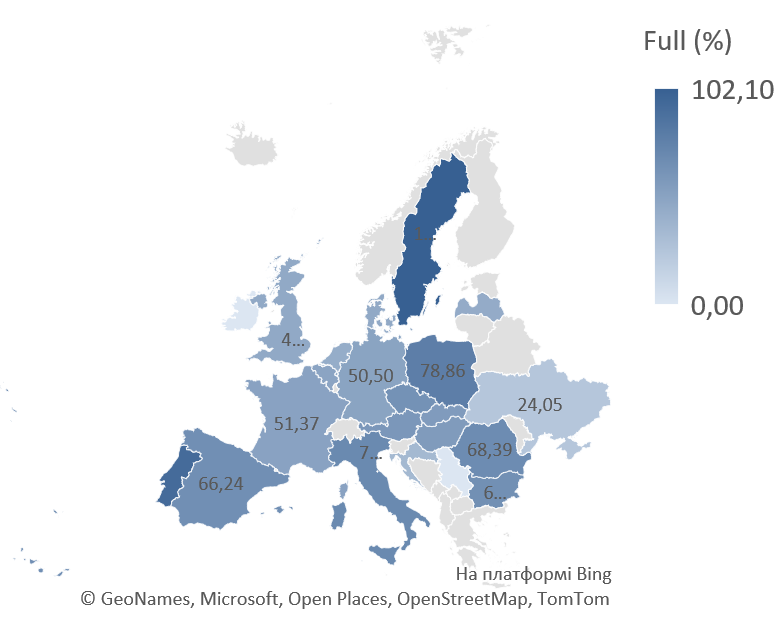
The Dutch TTF fell 3.7% on Thursday, January 8, on record-high LNG imports from the United States and forecasts of milder weather in northwestern Europe after the current storm Goretti passed. ICE said that by the end of 2025, the volume of futures and options on the TTF had reached a record 103 million contracts, the highest since the beginning of the year and the first time that TTF trading volume exceeded 100 million contracts. Starting February 23, 2026, the European TTF (Dutch) benchmark and UK wholesale gas benchmark futures will have longer trading hours: from 1:50 a.m. to midnight. In mid-December, ICE noted that “given the growth of the TTF derivatives market, which is vital to international price direction, ICE is working closely with clients to prepare for extended trading hours for European gas and power futures and options, including TTF, NBP and German Power, to align them with ICE’s Henry Hub and JKM markets. As of January 7, the EU’s gas storage capacity had fallen to 57.18% amid a significant reduction in supply. Reliable LNG supplies have mitigated the risks of price increases, and global LNG exports set historic records on December 25, with the US alone exporting 15.6 billion cubic meters.
nvestment funds reduced their net short positions in European gas from 78 TWh on December 31 to 72 TWh on January 7.
The volume of supplies from Norway decreased on January 8, as it was announced that the Norwegian gas field "Nyhamna" would be shut down, as a result of which the total capacity would be reduced by 20 million cubic meters per day and would last until January 16.
Natural gas imports from Europe averaged about 22 million cubic meters per day (-5.58%). Imports were present from most neighboring European countries. The basis of imports was the Polish direction. Exports from the customs warehouse were present in the amount of up to 1 million cubic meters per day, in the direction of Moldova. Ukraine’s storage facilities contained about 12.2 billion cubic meters of natural gas.