Gas price: Ukraine and Europe. Market overview January 26 - 30, 2026
On the “Medium- and Long-Term Market” section of the UEEX, trading continued for resources for January, February, and March 2026. In total, 13 companies formed positions for the purchase and sale of natural gas, including Ukrnafta, MC Ukrnaftoburinnya, LTK Elektrum, SGS, and Energo Zbut Trans. The section sold 4.04 million cubic meters of natural gas. Most of the natural gas sold was delivered to the gas transmission system in February 2026. Prices for items sold to the gas transmission system ranged from UAH 21,150 to UAH 21,250 per thousand cubic meters, excluding VAT.
On the short-term natural gas market of the UEEX, participants formed bids on the within-day market and the day-ahead market. In total, 29 agreements were concluded with a total volume of 725 thousand cubic meters.
Energy markets continued to rally in the last week of January as a combination of cooling forecasts, historically low gas inventories, nuclear power outages in France and the UK, and geopolitical uncertainty supported a persistent risk premium in gas prices.
The cold snap is increasing daily demand and leading to increased gas withdrawals from storage, reducing system reserves just as winter risks are peaking. This combination of factors has weighed on gas prices in the short term and led to increased volatility in both short-term and seasonal contracts. Volatility for the coming months has been reflected in the price curve, with prices for summer and winter seasonal contracts rising as traders overestimate the reliability of supply for the second half of winter and beyond. Even short-term weather or unforeseen risks can quickly lead to higher forward prices, especially when storage inventories are already tight. Forecasts for the remainder of January remain somewhat milder, but models now indicate below-seasonal temperatures from early February and throughout the forecast period.
The bullish momentum is supported by weather conditions and fundamental factors related to LNG. Falling temperatures in the US could significantly increase domestic heating demand, meaning European countries would have to compete with the US domestic market for gas supplies, likely driving up the cost of imports.
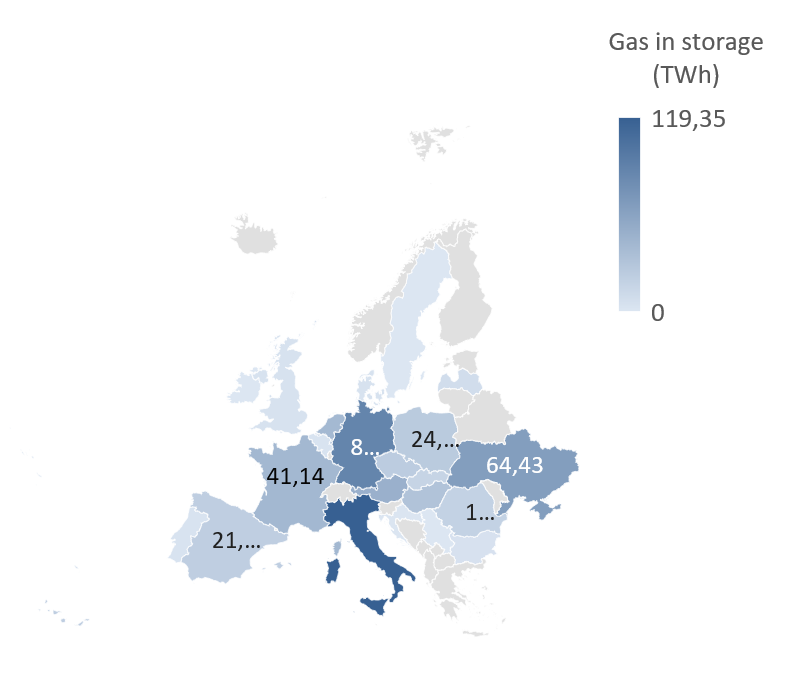
Storage levels are making the market more sensitive. UK gas stocks are currently at their lowest level in four years, and European stocks are also well below seasonal norms. EU gas storage occupancy fell to 42.9% on 28 January, compared with a five-year average of 62.5%. Low stocks mean the market is reacting more aggressively to any changes in demand or supply expectations.
Natural gas imports from Europe averaged about 21.83 million cubic meters per day (-3.64%). Imports were present from all neighboring European countries. The basis of imports was the Polish direction. Exports from the customs warehouse were present in the amount of up to 1 million cubic meters per day, towards Poland. Ukraine’s storage facilities contained 10.72 billion cubic meters of natural gas. The withdrawal was about 50 million cubic meters per day.