Gas price: Ukraine and Europe. Market overview January 12 - 16, 2026
On the "Medium and Long-Term Market" section of the UEEX, trading in resources continued for January, February, and March 2026. In total, positions for the purchase and sale of natural gas were formed by 8 companies, including Ukrnafta, MC Ukrnaftoburinnia, LTK Electrum. The section sold 24.9 million cubic meters (+173%). Natural gas was mainly sold with delivery to the gas transmission system and underground storage facilities during January 2026. The prices of the sold items were in the range of 19,365-21,274.6 UAH/thousand cubic meters excluding VAT and had an increasing trend.
In addition, Ukrnafta sold 15 million cubic meters of natural gas in the differential trading section at a premium of 7.69-9.62 euros to the TTF.
On the short-term natural gas market of the UEEX, participants formed orders on the within-day market and the day-ahead market. In total, 84 deals were concluded with a total volume of 3,510 thousand cubic meters (+64.71%).
Earlier this week, a number of intersecting factors led to a sharp jump in gas prices in the short term. The M+1 contract shows steady growth on most gas markets, with some showing weekly gains of >20%. Forecasts of below-seasonal low temperatures persisting through the end of January raise expectations for heating demand. Concerns remain about significant depletion of reserves during the winter, increasing the risk of increased demand for electricity in the summer, resulting in higher prices for summer contracts.
Reports on Thursday suggested the US could suspend military action against Iran after a brutal crackdown on protests in Tehran eased geopolitical uncertainty. The main risk from a conflict between Iran and the US is the potential disruption of gas and oil shipments through the Strait of Hormuz. A blockade or other disruption in the strait would affect about 20% of the world’s LNG.
Daily Norwegian gas deliveries, which this month are at their highest level in more than two years, are providing some confidence to the market. The outlook for LNG supplies is also encouraging, with the UK, for example, seeing annual deliveries almost triple since January 2025, with 13 shipments scheduled over the next two weeks.
TTF rose this week on news of LNG disruptions, while lower UGS levels and the risk of accelerated withdrawals increased price sensitivity to weather. Spot arbitrage to JKM in Europe’s favor remained as European spot benchmarks rose faster while freight rates fell, facilitating flows to Europe. The NBP spot price rose 5.6% to 90.25 pence/therm. UK gas prices rose on Thursday on stronger carbon prices, a cold snap and increased demand.
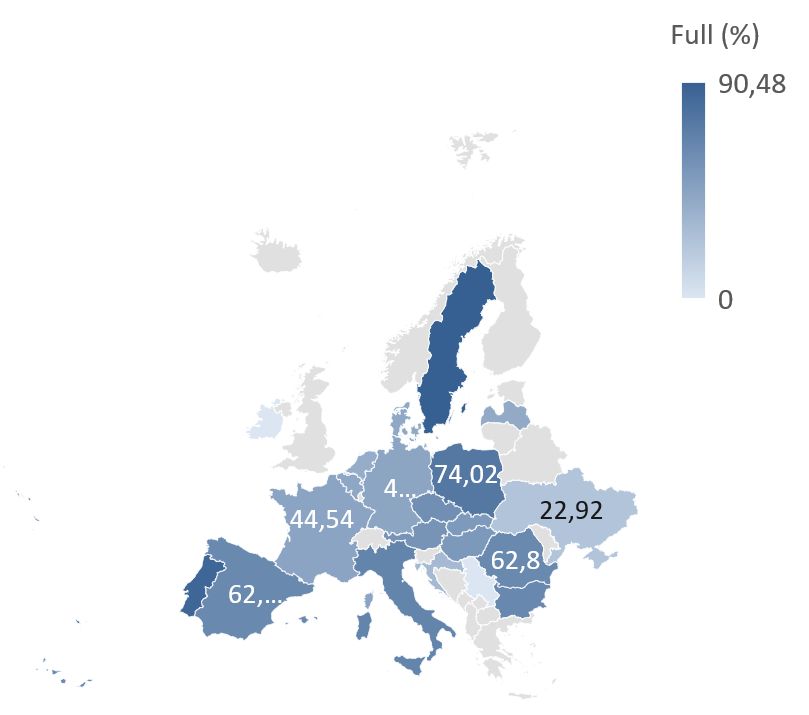
Cold weather will put additional pressure on European gas storage capacity. As of January 14, the EU gas storage capacity fell to 51.87%, the lowest seasonal level since the 2022 crisis.
Natural gas imports from Europe averaged about 24 million cubic meters per day (+9%). Imports were present from all neighboring European countries. The basis of imports was the Polish direction. Exports from the customs warehouse were present in the amount of about 2 million cubic meters per day, in the direction of Moldova. In the storage facilities of Ukraine there were 11.56 (-5.25%) billion cubic meters of natural gas.