Gas price: Ukraine and Europe. Market overview August 31 – September 04, 2026
In the "Medium and Long-Term Market" section of the UEEX, trading in the September 2026 resource in the GTS and UGS continued. In total, positions for the sale or purchase of natural gas were formed by 7 companies: GSC Naftogaz Trading, MC Ukrnaftoburinnia, Cherkasyteplokomunenergo, Golden Gate Energy, etc. In total, 5.1 million cubic meters of natural gas were sold in the section. Successful were the positions for buying – from Golden Gate Energy, for selling – from VK UKRNAFTOBURINNYA. The price moved downwards, crossing the line of 18250 UAH excluding VAT on Tuesday, September 1.
On the short-term natural gas market of the UEEX, participants formed applications on the within-day market and the day-ahead market, in the GTS and UGS. In total, 43 exchange agreements were concluded with a total volume of 1,073 thousand cubic meters.
During the trading week from August 31 to September 4, 2026, European natural gas prices recorded a continuous increase, continuing the trend of the previous 2 weeks.
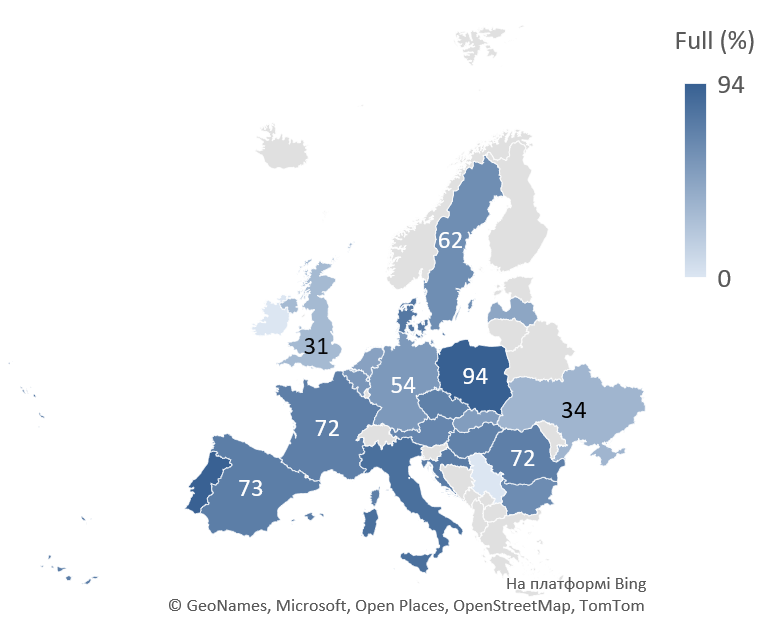
The situation with UGS in Europe remains the main fundamental driver of price growth, as according to AGSI data, on August 30 the lowest filling percentage was recorded in the entire history of observations for the season. The lack of commercial incentives to inject gas into storage (due to high spot prices) and general geopolitical tensions shape pessimistic market expectations for the medium term.
The key European benchmark, TTF, hit new highs on Monday and closed above €70. The catalyst was a sharp escalation in the conflict between the US and Iran, while the war approaches the six-month mark. The new normal has been ship-to-ship transshipment in the Strait of Hormuz – where a ship picks up cargo in the Gulf and transfers it to another waiting vessel outside the Strait – becoming commonplace in the oil market, but not in the gas market. According to Reuters, only three LNG cargoes have been transferred from ship to ship outside the Gulf since the war began, all in the past two weeks. The Strait remains effectively closed, and the market continues to factor in the possibility of daily fluctuations of 5-10% in either direction.
The overall European storage occupancy rate was 63.85% on September 3, compared to a five-year seasonal average of around 82%, according to the latest AGSI data, with key markets in North-West Europe even weaker, with Germany at 53.67% and the Netherlands at 42.21%. The current injection rates suggest the European Union is heading towards its lowest gas storage occupancy rate since 2013, according to the analysis.
September marks the peak of Norway’s annual gas field maintenance season. An estimated 1.65 billion cubic meters of supply, equivalent to approximately 18 TWh, will be taken out of service this month, with peak impacts this week reaching approximately 80 million cubic meters per day. Norwegian export capacity will be reduced by approximately 20% during the maintenance period and is not expected to be sufficient in the near future, with a flow of 285.4 million cubic meters per day.
The procurement window narrows with the start of the winter season on October 1 and the entry into force of the ban on the import of Russian LNG from January 1, 2027.
Natural gas imports from Europe were at 1.6 million cubic meters per day (practically unchanged from the previous week). Imports were present from Poland and Hungary. Exports from bonded warehouses were absent. Ukraine’s storage facilities contained 14.8 (+2%) billion cubic meters of natural gas. Withdrawals from underground storage facilities were almost non-existent, but there was injection - about 44 million cubic meters per day.