Gas price: Ukraine and Europe. Market overview August 24 - 28, 2026
In the section "Medium and Long-Term Market" of the UEEX, trading in resources for August and September 2026 in the GTS and UGS continued. In total, positions for the sale or purchase of natural gas were formed by 7 companies: GSC Naftogaz Trading, Ukrnafta, Ukrzaliznytsia, Ukrtransinvest, etc. In total, 3.56 million cubic meters of natural gas were sold in the section. The successful positions were for purchase - from Ukrzaliznytsia, Energo Zbut Trans, for sale - from Ukrnafta. The price moved downwards at a rapid pace, crossing the threshold of 19,000 UAH excluding VAT on Wednesday, August 26.
On the short-term natural gas market of the UEEX, participants formed applications on the intraday market and the day-ahead market, in the GTS and underground storage facilities. In total, 43 exchange transactions were concluded with a total volume of 1,137 thousand cubic meters.
European natural gas prices continued their rapid rise over the past week amid Washington’s threats of an "economic D-Day" against Iran, before capitulating as signs of diplomatic warming emerged.
The week started on Monday, August 24, with a significant jump to 68.32 EUR/MWh. On Thursday, August 27, quotes soared again, reaching 68.79 EUR/MWh (+ 4.5% per day). On Friday morning, August 28, the growth continued and in total for the week prices added more than 4%, recording the third consecutive week of continuous growth.
Overall, over the past month, European gas has risen in price by 14.02%, and in annual terms (compared to the end of August last year) the price jump is an incredible 118.37%. Analysts remain pessimistic about the future decline in the resource’s price: long-term forecasts indicate that in the next 12 months the price may reach 85.35 euros/MWh.
The main fundamental driver of the current price rally remains the winter storage crisis. Current injection rates indicate that Europe is inevitably heading towards the lowest level of filling of UGS since 2013. This crisis continues to be fueled by the “gas storage paradox”. With August spot prices already close to matching winter contracts, commercial traders have no financial incentive to buy expensive gas now for long-term storage. The lack of economic benefit in stockpiling increases the risk of shortages during winter peak loads on the power system.
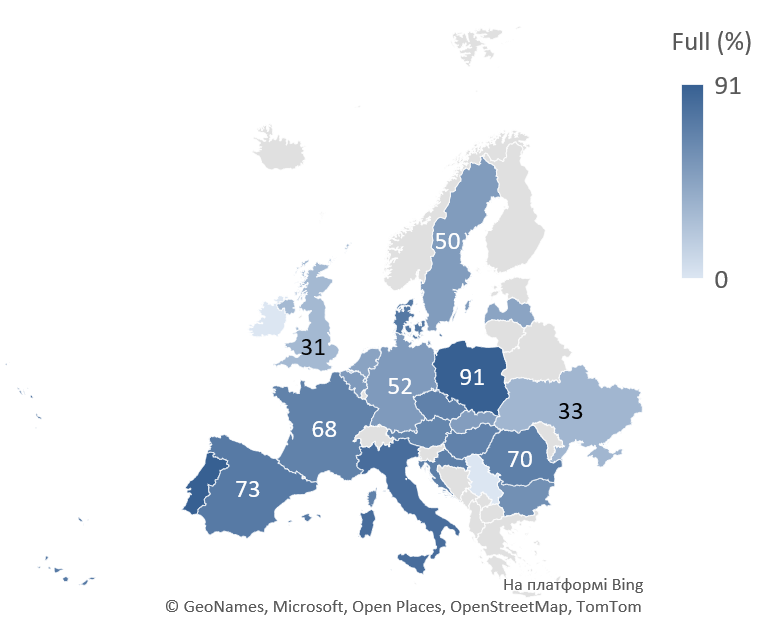
The European storage level is currently 63.8%, according to the latest AGSI data as of 27/08/2026, and still remains historically low at the end of August. Equinor CEO Anders Oppedal called the situation “alarming, but not necessarily a crisis”.
Natural gas imports from Europe were at 1.6 million cubic meters per day (-0.1 million cubic meters from the previous week). Imports were present from Poland and Hungary. Exports from customs warehouses were absent. Ukraine’s storage facilities contained 14.51 (+1.97%) billion cubic meters of natural gas. Withdrawals from underground storage facilities were almost non-existent, but there was injection - about 41 million cubic meters per day.