Gas price: Ukraine and Europe. Market overview August 17 - 21, 2026
In the "Medium and Long-Term Market" section of the UEEX, trading in resources for August and September 2026 in the GTS and UGS continued. In total, positions for the sale or purchase of natural gas were formed by 9 companies: GSC Naftogaz Trading, Ukrnafta, Ukrzaliznytsia, Cherkasyteplokomunenergo, etc. In total, 6.6 million cubic meters of natural gas, mainly of the August resource, were sold in the section. Successful were positions for purchase - from Ukrzaliznytsia, Concern "MTM", Cherkasyteplokomunenergo, Rivneteploenergo, for sale - from Ukrnafta.
On the short-term natural gas market of the UEEX, participants formed orders on the within-day market, in the GTS and UGS. In total, 99 exchange transactions were concluded with a total volume of 3,528 thousand cubic meters.
Over the past week, European gas futures continued a confident upward trend, renewing local highs: hopes for a diplomatic settlement around the Strait of Hormuz disappeared, and the conflict turned into a protracted war of attrition. Instead of the expected technical correction, the market showed steady growth amid concerns about the heating season.
On Tuesday, the price added more than 3%, to 63.64 euros/MWh, on Wednesday it was fixed at 63.34 euros/MWh, and on Thursday it broke through the psychological barrier, reaching a maximum of 65.69 euros/MWh. On Friday morning, trading stabilized at 65.07 euros/MWh. Over the month, prices increased by more than 4%.
Despite this, there are positive signals for importers: high TTF quotes are once again allowing Europeans to haul uncontracted LNG cargoes from Asian competitors, and the fall in freight rates for LNG tankers, despite geopolitical tensions in maritime hubs, is making logistics cheaper and allowing traders to buy spot gas more aggressively.
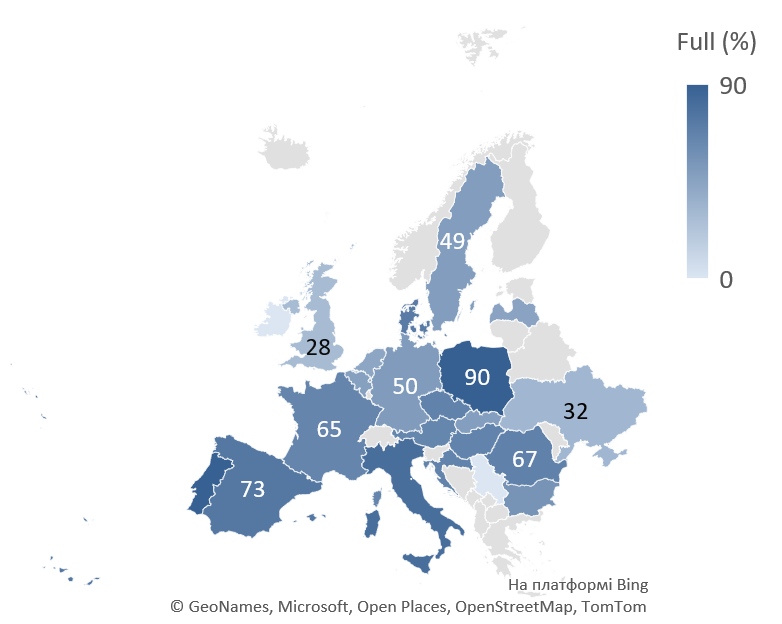
The main factor keeping prices above €65 remains the storage capacity crisis: according to AGSI as of 08/20/26, the cumulative capacity is 61.82% — 17% below the long-term average and slightly below the record low of 2021. According to updated data from August 19, Europe is moving towards the lowest pre-winter stock levels since 2013. The reason is the “gas storage paradox”: summer prices have almost equaled winter forwards, so it is commercially unprofitable for traders to buy expensive gas now for winter storage.
QatarEnergy extended its force majeure on LNG deliveries to India until August 31, the sixth month of cuts, while shipments to Europe rose 8% in a week on the back of reduced Asian cargoes. The situation is also exacerbated by German energy policy: Germany’s largest storage facilities in Europe have traditionally served as a buffer for its neighbors, and their slow filling is undermining the stability of the entire regional market.
Natural gas imports from Europe were at 1.7 million cubic meters per day (+ 0.05 million cubic meters from the previous week). Imports were present from Poland and Hungary. Exports from customs warehouses were present only to Poland and Moldova in volumes up to 0.1 million cubic meters per day. Ukraine’s storage facilities contained 14.23 (+2.08%) billion cubic meters of natural gas. Withdrawals from underground storage facilities were almost non-existent, but there was injection - about 39 million cubic meters per day.